Mojang’s blocked server list Primary
The live endpoint: SHA-1 hashes, one per line. Cannot be read back as domains, but any address can be hashed and checked against it. This is the whole enforcement mechanism.
Video source notes
The mechanism at the centre of this story is public and checkable. The player-count claim at the end of it is not, and the people who published it were selling something at the time.
Timeline
The core idea
Mojang publishes a blocked-server list as SHA-1 hashes, one per line, at a public endpoint. Your client checks it before connecting; a match kills the connection locally, on your machine, before a packet reaches the server. The error the player sees looks like the server broke. It did not — the game refused.
Purity Vanilla’s own account is the clearest record of what that felt like from the inside. Blocked on 26 December 2025, appeal filed the next day, ticket closed on 30 December with an instruction to wait, then automated responses or silence until a Discord approach on 13 January produced a human within two hours. Enforcement’s stated reasoning was that if they cannot find a contact email, they block to get attention. The condition for review was zero builds or chat tied to hate speech or discrimination, and the server changed its rules for the first time since 2019.
“It’s a text file of hashes that your own game consults before it lets you connect to anything.”
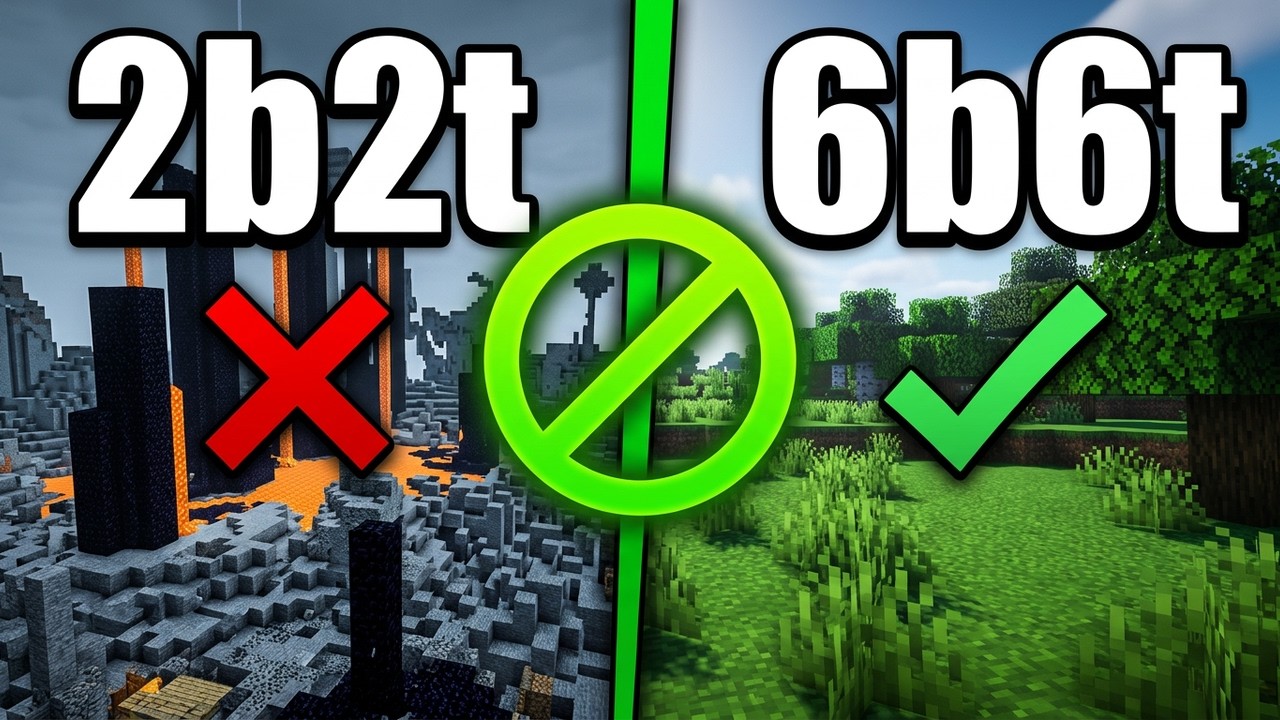
6b6t took the other route. Blocked on 15 July 2026, the owner refused to add rules and published AnarchyMod — a Fabric mod, open source on GitHub under the MIT licence, which overrides the client-side check. The server reported roughly 250 players back within 48 hours.
Then the part that needs a warning label. On 15 August 2026 6b6t announced an all-time record of over 1,155 concurrent players with no queue — during a 72-hour duplication event whose duration could be extended by buying ranks. The only source for the number is the server’s own blog, published while it had a direct financial interest in the server looking busy. That is not an accusation of fabrication. It is a statement that nobody independent has confirmed it.
Primary sources
The live endpoint: SHA-1 hashes, one per line. Cannot be read back as domains, but any address can be hashed and checked against it. This is the whole enforcement mechanism.
The admins’ own dated account: blocked 26 Dec 2025, appeal 27 Dec, ticket closed 30 Dec, silence until 13 Jan, then the “if we can’t find an email we will block to get attention” reasoning and the unblock condition.
The 15 July 2026 block, the owner’s refusal to add gameplay rules, the release of AnarchyMod, and roughly 250 players back inside 48 hours. Primary but self-interested.
The mod itself: open source, MIT licensed, Fabric loader, overrides the client-side blocklist check and adds 6b6t to the server list. Anyone can read exactly what it does.
The current rules and filter behaviour on 2b2t, including how the chat filter matches substrings.
Corroboration
Confirms the server’s rules were updated at Mojang Studios’ request, banning content tied to harmful ideas, hateful symbols or hateful speech.
The Bedrock cross-play experiment that began 11 December 2025 — the connection to console infrastructure that precedes the rule change.
Third-party round-up of which anarchy servers are on the list and how the hash check works in practice.
Queue, player count and version, for checking the “still online, still queued” claim.
The record claim
Cited so the claim can be examined, not so it can be repeated.
The only source for the record. Published by the server, during an event whose length could be extended by rank purchases.
The 72-hour duplication event starting 14 August 2026, and the mechanism by which purchases extended it — the financial incentive, stated by the server itself.
Earlier milestone post from the same blog, useful for seeing the baseline the record is measured against.
Third-party listing with independently sampled player numbers, for comparison against the blog’s figures.
Conflict log · what the sources dispute
One number is contested, one date is soft, and one part of the argument is explicitly the presenter’s judgement rather than a finding.
| Claim | What the video says | What the sources say | Position |
|---|---|---|---|
| 6b6t’s 1,155 record | reported as the server’s claim and explicitly not repeated as fact | single source: 6b6t’s own blog, during a monetised event | Stated as unverified. Third-party trackers were showing lower ranges. |
| 2b2t’s rule change date | 19 December 2025 | Wikipedia dates the change to 2025 without a day; the chat filter is dated 12 January 2026 elsewhere | Rule change and filter rollout are separate events. The gap is not resolved. |
| Player-count padding | raised as a known technique in the scene | no source alleges 6b6t did it | Raised as context for why the number needs independent confirmation. Not an allegation. |
| “Neither is still anarchy” | the presenter’s conclusion | both servers dispute the framing in their own material | Interpretation, labelled as interpretation. |
| The case for blocking | given in the video | Purity Vanilla’s account documents the appeal process failing for 18 days | Both stated. The tool being legitimate and the process being opaque are not in conflict. |
6b6t’s blog is a primary source for what 6b6t says and a marketing document for everything else. It is cited here as the former.